Construction Debris: What You Can (and Can't) Take to the Dump
Renovating your home? Drywall, lumber, concrete, and roofing materials have different disposal rules than regular trash. Here's what to know.
Read more →Find landfills, transfer stations, and recycling centers across Utah
98 waste disposal facilities
Utah's waste management network serves the Wasatch Front urban corridor and rural communities across the state. The Utah Department of Environmental Quality oversees solid waste regulations, with most facilities operated by counties or regional authorities.
Showing 1-24 of 98 locations
Salt Lake City · 1240 Wallace Rd, Salt Lake City, UT 84104
View DetailsPleasant Grove · 249 W 700 S, Pleasant Grove, UT 84062
View DetailsWest Valley City · 2274 Technology Dr, West Valley City, UT 84119
View DetailsElberta · Bayview Landfill, 10800 South State Road 68, Elberta, 84626, Utah
View DetailsBeaver · Beaver County Landfill, 1950 N 1250 W, Beaver, 84713, Utah
View DetailsWoods Cross · Bountiful Sanitary Landfill, 1300 West Pages Lane, Woods Cross, 84087, Utah
View DetailsLayton · Davis County Landfill, 1997 E 3500 N, Layton, 84040, Utah
View DetailsHeber City · 635 W Airport Rd, Heber City, UT 84032
View DetailsDuchesne · Duchesne County Landfill, Highway 87, Duchesne, 84021, Utah
View Details· 2000 South 20550 West, UT-87, Duchesne, UT 84021
View DetailsEast Carbon · ECDC Environmental Landfill, 1111 West Highway 123, East Carbon, 84520, Utah
View DetailsUtah's solid waste management is administered by the Division of Waste Management and Radiation Control within the Department of Environmental Quality (DEQ) under Utah Administrative Code Title R315. The Director administers rules containing requirements for persons or organizations that treat, store, or dispose of non-hazardous solid waste. Key rules include R315-303 for design, operation, and closure of disposal facilities; R315-304 for industrial waste landfills; R315-305 for construction and demolition waste; R315-308 for groundwater monitoring; and R315-316 for infectious waste.
To own, construct, modify, or operate a facility for transferring, treating, or disposing of nonhazardous solid waste requires approval from the Director through a permit or letter of approval, unless specifically exempted. New and expanding disposal sites, including on-site industrial facilities, must obtain permits and are subject to inspection. Nearly all landfills are subject to location restrictions, design and operating criteria, groundwater monitoring, corrective action requirements, closure and post-closure care, and financial assurance requirements.
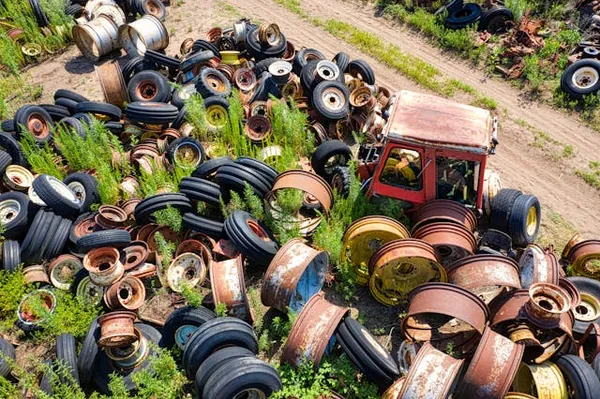
Solid waste permits are valid for five years and can be renewed. Simple landfill permits may be issued within three to six months, while complex projects take longer depending on size and scope. New commercial facilities also require gubernatorial and legislative approval. Permits may be modified or revoked when warranted. Landfill fees along the Wasatch Front range from $30 to $45 per ton, with residential self-haul typically costing $20 to $35 per pickup load.
The Wasatch Front urban corridor, home to most of Utah's population, has multiple landfills and transfer stations including the Salt Lake Valley Landfill operated by Salt Lake County. Several transfer stations offer convenient drop-off for residents. Utah hosts significant hazardous waste treatment and disposal operations, including the Clean Harbors Grassy Mountain facility in Tooele County, which received EPA renewal of its no-migration variance in December 2025 for continued land disposal of certain hazardous wastes.
Rural counties across Utah operate transfer stations that haul waste to regional landfills, with some remote areas having limited collection schedules. Salt Lake County and other urban areas operate household hazardous waste collection programs, while rural areas hold periodic collection events for paint, batteries, pesticides, and automotive fluids. Before visiting any facility, contact the Division of Waste Management and Radiation Control or the facility directly to confirm accepted materials and current fees.
Learn how to properly dispose of common items.
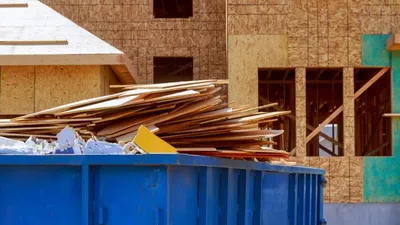
Renovating your home? Drywall, lumber, concrete, and roofing materials have different disposal rules than regular trash. Here's what to know.
Read more →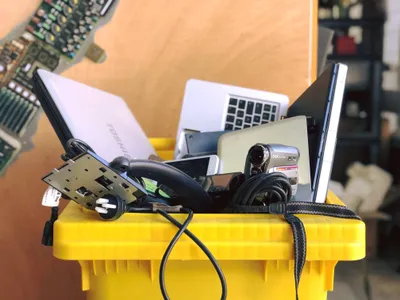
E-waste rules vary wildly by state. Some ban electronics from landfills entirely. Here's how to recycle old TVs, computers, and phones properly.
Read more →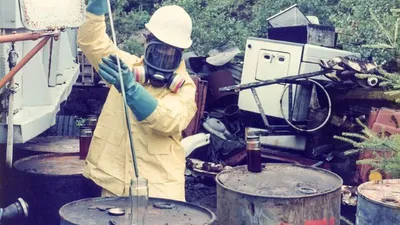
Most counties run free household hazardous waste collection events. Here's what qualifies, how to find your local event, and how to store stuff safely until then.
Read more →