Construction Debris: What You Can (and Can't) Take to the Dump
Renovating your home? Drywall, lumber, concrete, and roofing materials have different disposal rules than regular trash. Here's what to know.
Read more →Find landfills, transfer stations, and recycling centers across Washington
192 waste disposal facilities
Washington State emphasizes sustainable waste management through strong recycling mandates and organics diversion programs. The Washington Department of Ecology oversees regulations, with counties operating most disposal facilities.
Showing 1-24 of 192 locations
Othello · 504 S Lucy Rd, Othello, WA 99344
View DetailsEverett · 10700 Minuteman Dr, Everett, WA 98204
View DetailsSeattle · 70 South Alaska St, Seattle , WA 98106
View DetailsAlgona · 35315 W Valley Hwy S, Algona, WA 98001
View DetailsArlington · 19405 68th Dr NE, Arlington, WA 98223
View DetailsClarkston · Asotin County Landfill, , Clarkston, 99402, Washington
View DetailsBainbridge Island · 9423 NE Business Park Ln, Bainbridge Island, WA 98110
View DetailsBainbridge Island · 7215 NE Vincent Rd, Bainbridge Island, WA 98110
View DetailsPort Angeles · 1469 Blue Mountain Rd, Port Angeles, WA 98362
View DetailsSeattle · 18800 Orillia Rd S, Seattle, WA 98188
View DetailsCamano · 24 NE Camano Dr, Camano, WA 98282
View DetailsCamano · 75 S Camano Hill Rd, Camano, WA 98282
View DetailsWoodinville · 14020 NE 190th St, Woodinville, WA 98072
View DetailsSnohomish · 8915 Cathcart Way, Snohomish, WA 98296
View DetailsMoses Lake · 9524 Rd 7 NE, Moses Lake, WA 98837
View DetailsMaple Valley · 16645 228th Ave SE, Maple Valley, WA 98038
View DetailsMaple Valley · Cedar Hills Regional Landfill, 16645 228th Avenue SE, Maple Valley, 98038, Washington
View DetailsVancouver · 11034 NE 117th Ave, Vancouver, WA 98662
View DetailsWashington State's solid waste management is regulated under Chapter 173-351 WAC for municipal solid waste landfills and Chapter 173-350 WAC for solid waste handling standards. As directed by Chapter 70A.205.025 RCW, the Department of Ecology adopts standards for solid waste facilities, while local jurisdictional health departments have primary oversight and issue permits. Under Chapter 70A.205.100 RCW, health departments must adopt regulations at least as stringent as state standards but may implement stricter requirements.
The state Legislature passed significant organics management laws in 2022, 2024, and 2025 to divert organic materials from landfills through prevention, food rescue, and recycling facilities. Starting January 1, 2025, many Washington businesses producing at least four cubic yards of organic waste per week must divert it from curbside garbage into organics bins. The Department of Ecology aims to cut organic material sent to landfills by 75 percent by 2030, using 2015 as a baseline, and decrease edible food disposal by 20 percent by 2025.
By April 1, 2027, cities and counties in an Organics Recycling Collection Area (ORCA) must make year-round organics collection available to all residential customers except multifamily, and all non-residential customers producing more than 0.25 cubic yards weekly. Service must be provided at least 26 times per year. Development regulations amended after January 1, 2025, must allow siting of organic materials management facilities in industrial, agricultural, or rural zones.
Transfer station fees vary significantly by county. Seattle-area facilities in King County charge $140 or more per ton, while Eastern Washington facilities are typically less expensive. Residential self-haul fees depend on load size, so calling ahead for current pricing is recommended. Manufacturers must take back certain products including paint, electronics, and medications through product stewardship programs, with drop-off at participating retailers and designated collection sites.
Municipal solid waste landfill permit applications follow procedures in Chapter 173-351-720 WAC. Applicants should first contact their local health department to discuss permit application standards and fees. RCW 70A.205.130 requires Ecology approval before health departments issue or renew landfill permits, and allows both Ecology and health departments to suspend permits and issue penalties for violations. Before visiting any facility, check with your county for accepted materials, fees, and operating hours.
Learn how to properly dispose of common items.
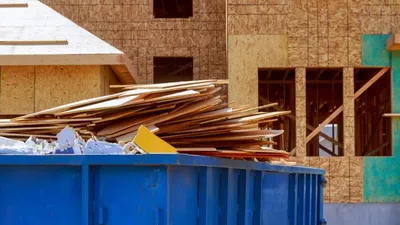
Renovating your home? Drywall, lumber, concrete, and roofing materials have different disposal rules than regular trash. Here's what to know.
Read more →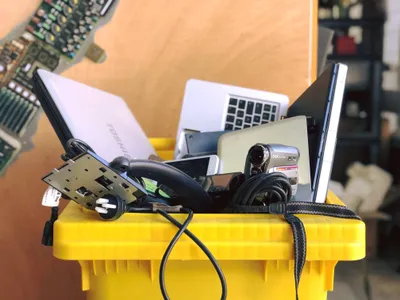
E-waste rules vary wildly by state. Some ban electronics from landfills entirely. Here's how to recycle old TVs, computers, and phones properly.
Read more →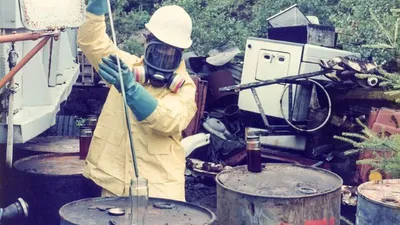
Most counties run free household hazardous waste collection events. Here's what qualifies, how to find your local event, and how to store stuff safely until then.
Read more →