Construction Debris: What You Can (and Can't) Take to the Dump
Renovating your home? Drywall, lumber, concrete, and roofing materials have different disposal rules than regular trash. Here's what to know.
Read more →Find landfills, transfer stations, and recycling centers across Connecticut
230 waste disposal facilities
Connecticut operates under a unique system where most waste goes through regional resource recovery facilities (waste-to-energy plants) rather than traditional landfills. The Connecticut Department of Energy and Environmental Protection oversees this network serving all 169 municipalities.
Showing 1-24 of 230 locations
Litchfield · 14 Iffland Pond Rd, Litchfield, CT 06759
View DetailsAnsonia · 1 N Division St, Ansonia, CT 06401
View DetailsAshford · 232 Upton Rd, Ashford, CT 06278, United States
View DetailsBerlin · 19 Town Farm Ln, Berlin, CT 06037, United States
View DetailsBerlin · 19 Town Farm Ln, Berlin, CT 06037
View DetailsBloomfield · 800 Bloomfield Ave, Bloomfield, CT 06002
View DetailsBranford · 747 E Main St, Branford, CT 06405
View DetailsBranford · 747 E Main St, Branford, CT 06405, United States
View DetailsBranford · 1019 Main St, Branford, CT 06405
View DetailsBridgeport · 475 Asylum St, Bridgeport, CT 06610
View DetailsBridgeport · 475 Asylum St, Bridgeport, CT 06610, United States
View DetailsBristol · Lake Ave, Bristol, CT 06010, United States
View DetailsSouthington · 65 Triano Dr, Southington, CT 06489
View DetailsNorth Branford · 51 Ciro Rd, North Branford, CT 06471
View DetailsNorth Branford · 1521, 51 Ciro Rd, North Branford, CT 06471
View DetailsMeriden · 298 Evansville Ave, Meriden, CT 06451
View DetailsMiddletown · 180 Johnson St, Middletown, CT 06457
View DetailsConnecticut's waste management system differs significantly from most states, relying primarily on waste-to-energy facilities rather than traditional landfills. The Connecticut Department of Energy and Environmental Protection (DEEP) oversees this network through the Comprehensive Materials Management Strategy, which emphasizes source reduction, recycling, and composting before energy recovery, with landfill disposal as the last resort. Despite these efforts, Connecticut still disposes of approximately 2.4 million tons of trash annually, roughly 1,370 pounds per person per year.
Each of Connecticut's 169 municipalities operates a transfer station where residents bring household waste. Access typically requires a permit or sticker obtained from your town hall, with proof of residency. Waste collected at these stations is transported to regional resource recovery facilities that burn trash to generate electricity. Hours, fees, and accepted materials vary by municipality, so check with your town before visiting. Some towns charge per bag while others include disposal in property taxes.
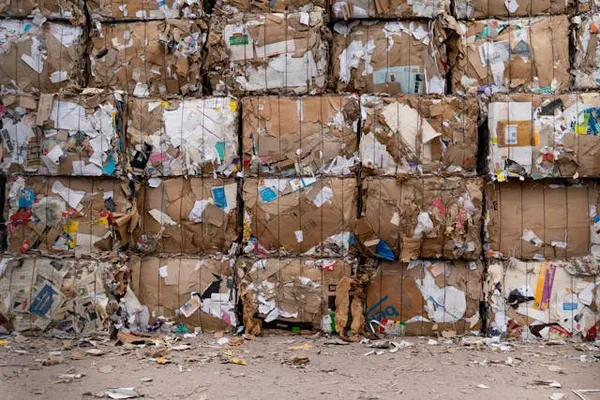
Recycling is mandatory throughout Connecticut, with nine designated items that cannot be disposed of in regular trash: glass and metal food containers, corrugated cardboard, newspaper, white office paper, scrap metal, leaves, used motor oil, and vehicle batteries. Single-stream recycling allows residents to combine acceptable recyclables in one container. Contaminating recyclables with trash can result in fines, and facilities may reject contaminated loads.
Special waste items require separate handling at most transfer stations. Electronics, mattresses, tires, and appliances containing refrigerants have designated drop-off areas with specific fees. Connecticut's mattress recycling program, funded by fees collected at retail purchase, allows residents to return old mattresses when buying new ones or dispose of them at transfer stations. White goods like refrigerators and air conditioners require refrigerant removal before disposal.
Construction and demolition debris goes to specialized C&D facilities or volume reduction plants rather than resource recovery facilities. These materials are processed to recover recyclable components before residuals go to permitted landfills. For household hazardous waste like paint, pesticides, and chemicals, DEEP coordinates collection events throughout the year. Contact the Solid Waste Office at 860-424-3366 for guidance on proper disposal of unusual materials.
Learn how to properly dispose of common items.
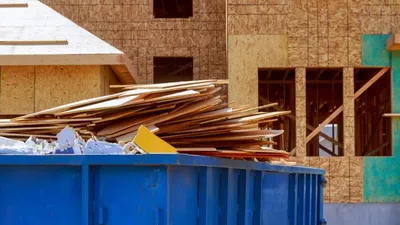
Renovating your home? Drywall, lumber, concrete, and roofing materials have different disposal rules than regular trash. Here's what to know.
Read more →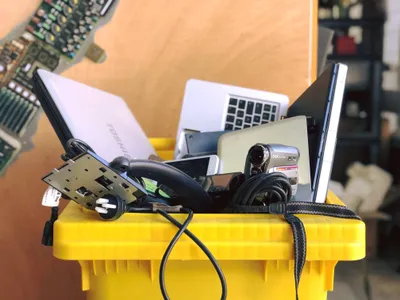
E-waste rules vary wildly by state. Some ban electronics from landfills entirely. Here's how to recycle old TVs, computers, and phones properly.
Read more →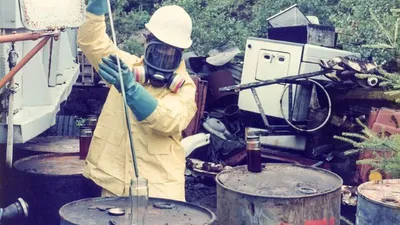
Most counties run free household hazardous waste collection events. Here's what qualifies, how to find your local event, and how to store stuff safely until then.
Read more →