Construction Debris: What You Can (and Can't) Take to the Dump
Renovating your home? Drywall, lumber, concrete, and roofing materials have different disposal rules than regular trash. Here's what to know.
Read more →Find landfills, transfer stations, and recycling centers across Wisconsin
173 waste disposal facilities
Wisconsin's waste management system serves diverse communities from Milwaukee and Madison to rural farming areas. The Wisconsin Department of Natural Resources oversees regulations, with counties operating most disposal facilities and recycling programs.
Showing 1-24 of 173 locations
Friendship · Adams County Resource Recovery Landfill, 1420 State Road 21, Friendship, 53934, Winsconsin
View DetailsLac du Flambeau · 13897 WI-70, Lac Du Flambeau, WI 54538
View DetailsWest Bend · 803 N River Rd, West Bend, WI 53090
View DetailsAshwaubenon · 2561 S Broadway, Ashwaubenon, WI 54304
View DetailsGreen Bay · 2561 S Broadway, Green Bay, WI 54304
View DetailsHobart · 3734 W Mason St, Hobart, WI 54155
View DetailsMondovi · County Rd H, Mondovi, WI 54755
View DetailsMadison · 1501 W Badger Rd, Madison, WI 53713
View DetailsWaukesha · 750 Sentry Dr, Waukesha, WI 53186
View DetailsWisconsin's solid waste management is regulated by the Department of Natural Resources (DNR) under Wisconsin Administrative Code chapters NR 500-544. The DNR revised administrative code regulating municipal solid waste and industrial landfills, with changes taking effect October 1, 2025. Key chapters include NR 503 for one-time disposal and construction/demolition landfills, NR 504 for landfill location and design criteria, NR 506 for operational criteria, NR 507 for environmental monitoring, and NR 524 for operator training and certification requirements.
State law requires recycling of paper, cardboard, glass, metal, plastics, and yard waste, with most communities offering curbside recycling and transfer stations maintaining recycling areas. Putting recyclables in the trash can result in fines. The DNR is developing rules to update effective recycling program criteria in chapter NR 544 for responsible units and materials recovery facilities, and amending chapters 500, 502, and 542 related to waste reduction and recovery.
State tipping fees are $12.997 per ton for municipal solid waste and non-high-volume industrial waste, assessed and collected quarterly. County disposal fees typically range from $40 to $60 per ton, with residential self-haul loads costing $15 to $40 depending on the facility. Some counties offer free disposal days for residents. Before a landfill can accept waste, the DNR must approve construction documentation and financial assurance for closure and long-term care, then issue an operating license.
E-Cycle Wisconsin requires manufacturers to provide free recycling for computers, TVs, and other electronics, with drop-off sites available in most communities. Retailers and collection events also accept e-waste. Yard waste is banned from landfills statewide, with most communities offering collection or drop-off sites where material is composted into mulch, often available free to residents. Burning leaves is restricted in many areas.
Several facility types require DNR permits or licenses including landfills, transfer stations, and processing facilities. The DNR provides guidance on disposal of waste asbestos-containing material, updated in 2025. Before visiting any facility, contact your county solid waste department or the DNR to confirm accepted materials, current fees, and operating hours.
Learn how to properly dispose of common items.
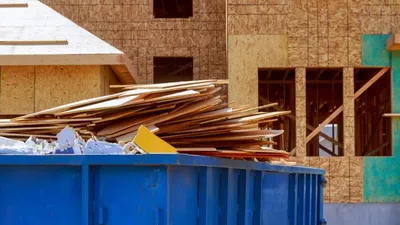
Renovating your home? Drywall, lumber, concrete, and roofing materials have different disposal rules than regular trash. Here's what to know.
Read more →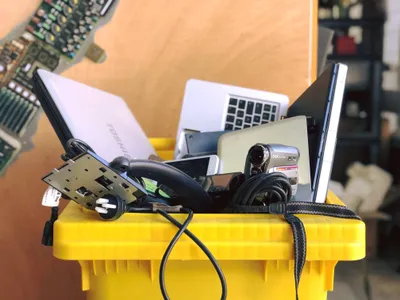
E-waste rules vary wildly by state. Some ban electronics from landfills entirely. Here's how to recycle old TVs, computers, and phones properly.
Read more →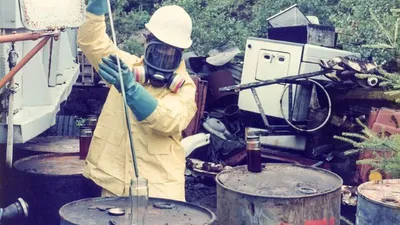
Most counties run free household hazardous waste collection events. Here's what qualifies, how to find your local event, and how to store stuff safely until then.
Read more →