Construction Debris: What You Can (and Can't) Take to the Dump
Renovating your home? Drywall, lumber, concrete, and roofing materials have different disposal rules than regular trash. Here's what to know.
Read more →Find landfills, transfer stations, and recycling centers across New Hampshire
19 waste disposal facilities
New Hampshire relies heavily on transfer stations and waste-to-energy facilities, with limited landfill capacity in the state. The New Hampshire Department of Environmental Services oversees solid waste management, with most facilities operated by municipalities or regional cooperatives.
Showing 1-19 of 19 locations
Bedford · 77 Chubbuck Rd, Bedford, NH 03110
View DetailsBrookline · 38 N Mason Rd, Brookline, NH 03033
View DetailsNashua · Four Hills Landfill, 840 West Hollis Street Route 111, Nashua, 3062, New Hampshire
View DetailsLebanon · Lebanon Regional Solid Waste Facility, 370 Plainfield Road, West Lebanon, 3784, New Hampshire
View DetailsBerlin · Mount Carberry Landfill, 80 Hutchins Street, Berlin, 3570, New Hampshire
View DetailsBethlehem · North Country Environmental Services Landfill, 581 Trudeau Road, Bethlehem, 3574, New Hampshire
View DetailsPelham · 47-85 Newcomb Field Pkwy, Pelham, NH 03076
View DetailsHollis · 10 Rocky Pond Rd, Hollis, NH 03049
View DetailsShelburne · 11 Landfill Rd, Shelburne, NH 03581
View DetailsBarrington · 224 Smoke St, Barrington, NH 03825
View DetailsLaconia · 385 Meredith Center Rd, Laconia, NH 03246
View DetailsRochester · 200 Rochester Neck Rd, Rochester, NH 03839
View DetailsRochester · 18 Isinglass Drive Bldg 1, Rochester, NH 03839
View DetailsNew Hampshire's solid waste management is regulated by the Department of Environmental Services (NHDES) under RSA 149-M and the NH Solid Waste Rules Env-Sw 100-2000, which have recently undergone extensive revision and readoption. The state has limited in-state landfill capacity with only six operating double-lined landfills, one single-lined landfill, and two unlined landfills, meaning much waste is transported to out-of-state facilities or processed at waste-to-energy plants. This affects disposal costs statewide.
Starting January 1, 2026, New Hampshire will impose a $3.50 per ton surcharge on all solid waste taken to the state's six active landfills or its waste-to-energy facility. While municipalities, businesses, and institutions will pay this fee, New Hampshire towns and cities will receive 100 percent quarterly rebates. Many communities use pay-as-you-throw systems where residents purchase special bags for trash, typically $1 to $3 per bag, incentivizing recycling since recyclables are usually free to dispose.
New disposal bans took effect in 2025 to protect the environment and reduce facility fires. Effective February 1, 2025, entities generating one or more tons of food waste per week within 20 miles of a capable management facility are prohibited from landfilling or incinerating that waste. Effective July 1, 2025, rechargeable lithium-ion batteries are banned from disposal in landfills and incinerators due to fire risks from items like e-bikes, power tools, portable electronics, and rechargeable personal care products.
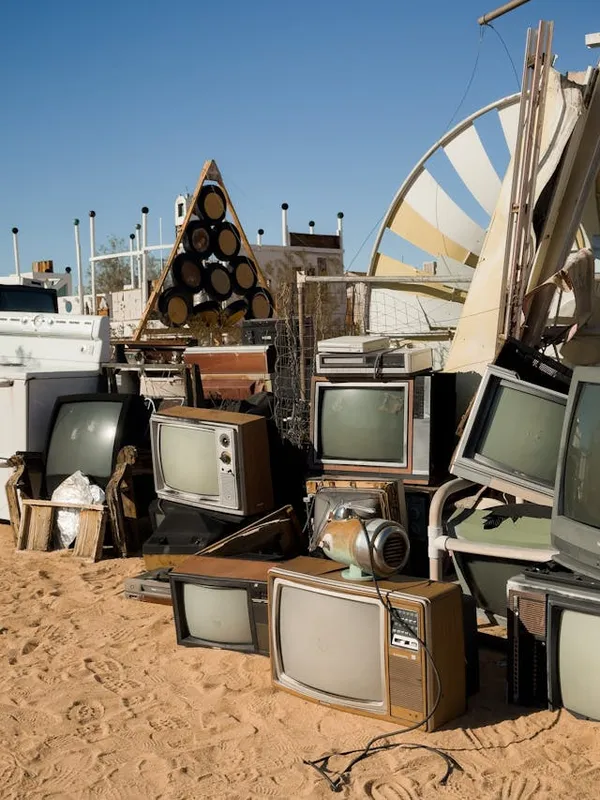
Electronics have long been banned from New Hampshire disposal facilities, including TVs, monitors, computers, laptops, tablets, cell phones, printers, copiers, and media players. Mercury-added products are also prohibited. Yard waste including leaves, grass clippings, garden debris, and branches cannot go to landfills or incinerators. Transfer stations throughout the state have separate collection areas for these banned materials.
Most New Hampshire towns require permits or vehicle stickers to use their transfer stations, obtained at town hall often with vehicle registration. Hours and fee structures vary by municipality, with some charging per-visit fees in addition to or instead of permits. Before visiting, check with your town for specific requirements. NHDES maintains information on waste reduction, diversion programs, and compliance requirements on their website.
Learn how to properly dispose of common items.
Renovating your home? Drywall, lumber, concrete, and roofing materials have different disposal rules than regular trash. Here's what to know.
Read more →
E-waste rules vary wildly by state. Some ban electronics from landfills entirely. Here's how to recycle old TVs, computers, and phones properly.
Read more →
Most counties run free household hazardous waste collection events. Here's what qualifies, how to find your local event, and how to store stuff safely until then.
Read more →