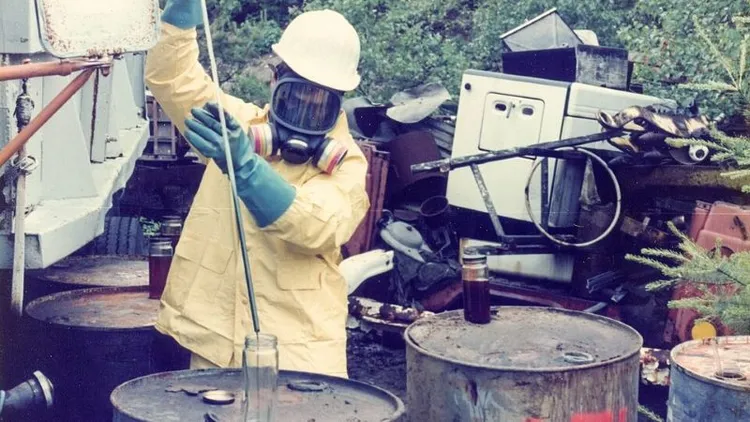
Under your sink. In the garage. The shed out back. After 25 years in waste management, I can tell you that most homes have far more hazardous materials than people realize. Old paint cans, cleaning chemicals, pesticides, automotive fluids, batteries—it adds up.
You can’t throw this stuff in the regular trash. It can contaminate landfills, injure sanitation workers, and pollute groundwater. But you also can’t let it pile up forever. That’s where household hazardous waste (HHW) collection comes in.
What Qualifies as Household Hazardous Waste
Understanding what counts as HHW helps you prepare for collection events and avoid putting dangerous materials in regular trash.
Common HHW items:
- Oil-based paints, stains, and varnishes
- Paint thinner and mineral spirits
- Pesticides, herbicides, and insecticides
- Automotive fluids (motor oil, antifreeze, brake fluid, transmission fluid)
- Pool and spa chemicals
- Cleaning solvents and degreasers
- Fluorescent tubes and CFL bulbs
- Mercury thermometers and thermostats
- Propane tanks (small camping cylinders)
- Fire extinguishers
- Acids and bases (muriatic acid, lye)
- Aerosol cans with product remaining
Usually NOT HHW (handled separately):
- Latex paint (can be dried out and trashed—see our paint disposal guide)
- Alkaline batteries (regular trash in most states)
- Electronics (see our e-waste guide)
- Appliances (see our appliance guide)
- Tires (see our tire guide)
Look for warning words on product labels: "Danger," "Warning," "Caution," "Poison," "Flammable," or "Corrosive." These indicate the product likely needs HHW disposal.
Finding Your Local HHW Collection
Most counties and large cities run HHW collection events or permanent drop-off sites. The key is knowing where and when.
How to find them:
- Search “[your county] household hazardous waste”
- Check your city’s waste management website
- Call 311 (in larger cities)
- Use Earth911.com and enter your zip code
- Check the EPA’s HHW page for resources
Types of programs:
| Program Type | Frequency | Convenience |
|---|---|---|
| Collection events | Monthly, quarterly, or annual | Need to hit the right day |
| Permanent facilities | Year-round | Limited hours (often weekdays) |
| Mobile collection | Rotating schedule by neighborhood | Comes to you |
Once you find your local program, mark the next few dates on your calendar. Collection events often fill up, and knowing the schedule prevents materials from piling up for months.
What to Expect at HHW Collection
Your first time can be a little intimidating. Here’s how it typically works.
The process:
- Drive up. Most sites are drive-through. Stay in your car.
- Workers unload for you. Trained staff handle the materials. You don’t need to lift anything.
- Brief questions. They may ask what you’re dropping off to sort correctly.
- Done. Usually takes 5-15 minutes depending on the line.
Go early—within the first hour of opening. Lines can get very long, especially at quarterly events. I've seen waits stretch to 90 minutes at popular events. The last hour is also slammed with people who procrastinated.
What to bring:
- Materials in original containers when possible
- A box or bin to keep containers upright and prevent spills
- ID or proof of residency (some programs check)
How to Store HHW Safely Until Collection
If your collection event is weeks or months away, proper storage is essential for safety.
General rules:
- Keep containers sealed and upright
- Store in a cool, dry place
- Keep away from heat sources and direct sunlight
- Keep away from children and pets
- Don’t mix different chemicals together
- Keep in original containers when possible
Never pour different chemicals into the same container. Some combinations create toxic gases, explosive reactions, or dangerous heat. Even if they seem similar, keep everything in original containers.
For leaking containers: Place the leaking container inside a larger sealed container (like a 5-gallon bucket with a lid). Add cat litter or vermiculite to absorb the leak. Don’t pour into different containers unless you’re certain it’s safe.
For flammable materials: Store away from water heaters, furnaces, and anything with a pilot light or electrical ignition. A detached shed or garage is ideal.
Extreme heat can cause pressurized containers to rupture and some chemicals to become unstable. Don't store hazardous materials in hot attics or direct sunlight. A climate-controlled space is safest.
Specific Items and Where They Go
Not everything needs to wait for an HHW event. Many common items have year-round drop-off options.
Motor Oil
Many auto parts stores accept used motor oil for free, year-round. No need to wait for HHW collection.
| Retailer | Accepts Motor Oil | Limit |
|---|---|---|
| AutoZone | Yes | 5 gallons/day |
| O’Reilly | Yes | 5 gallons/day |
| Advance Auto | Yes | Varies |
| Walmart Auto Center | Some locations | Check locally |
Use the same container your new oil came in to store the old oil. Pour carefully using a funnel, seal it, and drop it off on your next trip to the auto parts store. Saves a dedicated trip.
Batteries
Different batteries have different rules.
Car batteries: Auto parts stores accept them, often with a core credit ($10-20). This is the easiest option.
Rechargeable batteries: Call2Recycle runs a network of drop-off locations. Many retailers participate:
- Best Buy
- Home Depot
- Lowe’s
- Staples
Alkaline batteries (AA, AAA, etc.): Regular trash in most states. They’re no longer considered hazardous waste.
Exception: California requires all batteries to be recycled—don’t put them in the trash.
Before recycling lithium batteries (laptop batteries, power tool batteries), tape the terminals with electrical tape. Exposed terminals can cause fires in recycling bins. Takes 5 seconds and prevents disasters.
Medications
Some HHW events accept medications, but there are better options.
Year-round options:
- Many pharmacies have take-back programs (CVS, Walgreens, Rite Aid)
- DEA National Prescription Drug Take Back Day (twice per year, April and October)
- Police station drop boxes (check if available locally)
- Some hospitals and medical facilities
Never flush medications down the toilet unless the label specifically instructs you to. Most medications contaminate water supplies and harm aquatic life. Wastewater treatment plants can't remove all pharmaceutical compounds.
Propane Tanks
Small camping cylinders (1 lb): Often accepted at HHW events. Some transfer stations take them year-round.
Larger grill tanks (20 lb): Can be exchanged at many retailers:
- Blue Rhino locations (grocery stores, hardware stores)
- AmeriGas locations
- Home Depot, Lowe’s (exchange programs)
Propane tank exchange programs take your old tank regardless of condition—even rusty, dented, or expired tanks. It's the easiest way to dispose of a damaged propane tank.
Fluorescent Bulbs and CFLs
These contain mercury and should not go in regular trash.
Year-round drop-off:
- Home Depot (all locations)
- Lowe’s (most locations)
- IKEA
- Many hardware stores
HHW events also accept them.
Fire Extinguishers
Most HHW events accept fire extinguishers. Some fire departments also take them. Call your local fire department to ask—they may accept them for free.
What HHW Collection Won’t Take
HHW collection has limits. Know what’s excluded to avoid wasted trips.
| Item | Where It Goes Instead |
|---|---|
| Explosives, ammunition | Local police department |
| Radioactive materials | Specialized disposal (rare) |
| Medical sharps (needles) | Pharmacy sharps programs |
| Business/commercial quantities | Commercial hazardous waste services |
| Electronics | E-waste recycling |
| Asbestos | Certified asbestos contractors |
Never bring ammunition or explosives to HHW collection. Call your local police department's non-emergency line for guidance. Many police departments will safely dispose of old ammunition.
State-Specific Notes
California
California has excellent HHW infrastructure—one of the best in the country. Most counties have permanent drop-off facilities open weekly. Many retailers are also required to accept certain hazardous items (batteries, fluorescent bulbs, motor oil). Check CalRecycle for locations.
Texas
Programs vary significantly by county. Texas urban areas (Houston, Dallas, Austin, San Antonio) have regular collection events and some permanent facilities. Rural areas may have fewer options—quarterly events are common. Check TCEQ for your county’s program.
Florida
Florida HHW programs are run at the county level. Most counties have periodic collection events, with some urban counties operating permanent facilities. Check the Florida DEP for county-specific programs.
New York
NYC runs SAFE disposal events throughout the year. Check NYC SAFE Disposal for dates and locations. Upstate New York counties run their own programs—frequency varies.
Georgia
My home state. Most metro Georgia counties (Fulton, DeKalb, Cobb, Gwinnett) run monthly or quarterly HHW events. Some have permanent facilities with limited hours. Check Georgia facilities for locations and schedules.
If You’re Doing a Major Cleanout
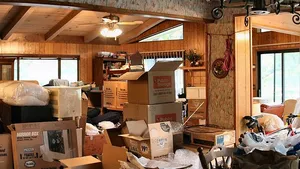
Cleaning out a deceased relative’s home? Dealing with a hoarding situation? You might have more hazardous materials than HHW events allow (limits typically 50-100 lbs per visit).
Options for large quantities:
- Call your county HHW program. Explain the situation—they may schedule a special pickup or allow multiple visits.
- Hire a hazardous waste removal company. Expensive ($500+) but handles everything, including materials you can’t identify.
- Make multiple trips. Spread disposal across several collection events.
If you find containers you can't identify—no label, strange color, unknown substance—don't guess. Take a photo and call your local HHW program for advice. They deal with mystery chemicals regularly and can help.
Disposal Checklist
- Find your local HHW program and mark collection dates
- Gather materials from garage, shed, basement, and under sinks
- Keep materials in original containers when possible
- Store safely: sealed, upright, away from heat
- Drop off motor oil at auto parts stores (no waiting needed)
- Arrive early at collection events to avoid long lines
Doing a Full Cleanout?
If you’re clearing out more than just hazardous materials, you might also be dealing with:
- Old paint (latex vs oil-based rules)
- Electronics (e-waste recycling)
- Appliances (refrigerant handling)
- Tires (special disposal required)
- Construction debris (dumpster options)
The Bottom Line
- Find your local program: Search “[county] household hazardous waste”
- Mark the dates: Put the next collection event on your calendar
- Gather materials: Check the garage, shed, basement, and under every sink
- Use year-round options: Motor oil, batteries, and fluorescent bulbs don’t need to wait
- Show up early: Lines get long at popular events
Don’t let hazardous materials pile up for years. One trip to an HHW event clears out the backlog and makes your home safer.
Use our state directory or interactive map to find disposal facilities near you.
After each HHW trip, walk through your garage and storage areas with fresh eyes. It's easy to miss things the first time. I once found a can of 40-year-old insecticide behind a workbench that I'd walked past for years.