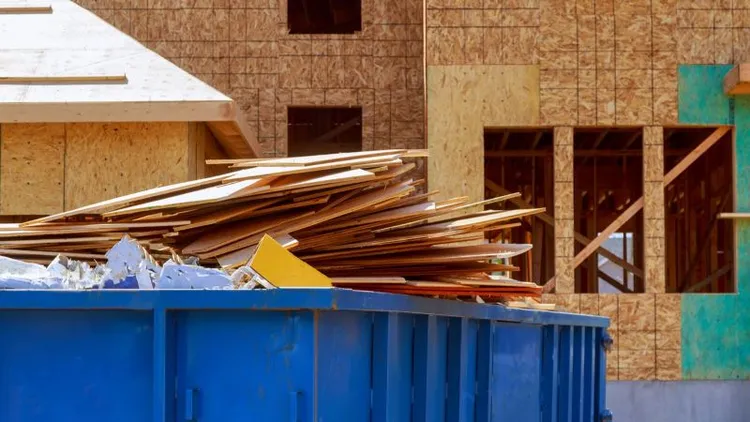
You knocked out a wall. Replaced the deck. Tore off the old roof. Now you’ve got a pile of construction debris and no idea what to do with it.
After 25 years in waste management, I can tell you construction and demolition waste (C&D) is one of the heaviest and most expensive categories to dispose of. Many transfer stations have separate areas, different fees, and specific rules for what they’ll accept. Understanding these rules can save you hundreds of dollars.
What Counts as Construction Debris
Understanding what qualifies as C&D helps you choose the right disposal method and avoid unexpected fees.
Typical C&D materials:
- Drywall/sheetrock
- Lumber and wood framing
- Concrete and masonry
- Roofing materials (shingles, tar paper, underlayment)
- Flooring (tile, hardwood, laminate, vinyl)
- Brick and block
- Metal (pipes, flashing, ductwork, rebar)
- Insulation (except asbestos)
- Windows and doors
Usually NOT C&D (different rules apply):
- Appliances (see our appliance disposal guide)
- Hazardous materials (asbestos, lead paint, chemicals)
- Dirt and clean fill (often separate, cheaper category)
- Landscaping debris (that’s yard waste)
- Electronics (see our e-waste guide)
Many facilities charge different rates for different materials. Mixed loads cost more than sorted loads. If you have a lot of concrete, wood, and metal, separating them can significantly reduce your disposal costs.
Option 1: Transfer Station Drop-Off
Most transfer stations accept construction debris, but expect to pay more than regular trash rates. This is the best option for small to medium DIY projects.
What to expect:
- Charged by weight (most common) or volume
- Minimum fees typically $40-100
- Separate unloading area from regular household trash
- May need to sort materials at the facility
- Some materials have weight limits or restrictions
| Material Type | Typical Rate |
|---|---|
| Mixed C&D | $60-100/ton |
| Clean wood | $40-70/ton |
| Concrete/masonry | $20-40/ton |
| Roofing | $50-80/ton |
| Drywall | $60-100/ton |
Use our interactive map to find facilities near you, or check by state: California, Texas, Florida, New York, Georgia.
Call ahead before making the trip. Some facilities have limits on certain materials—especially drywall, which can create hydrogen sulfide gas in landfills. Knowing the rules in advance saves wasted trips.
Option 2: Dumpster Rental
For larger projects, renting a dumpster is usually easier and often cheaper than making multiple transfer station trips. This is my go-to recommendation for anything beyond a small bathroom remodel.
Typical sizes and uses:
| Size | Best For | Typical Cost/Week |
|---|---|---|
| 10 cubic yards | Bathroom remodel, deck removal | $250-400 |
| 20 cubic yards | Kitchen remodel, small roof | $350-500 |
| 30 cubic yards | Major renovation, full roof | $400-600 |
| 40 cubic yards | New construction, whole-house demo | $500-800 |
Get quotes from 2-3 companies. Prices vary dramatically by location and competition. I've seen $200 differences between companies in the same city. Also ask about weight limits—going over can cost $50-100 per ton extra.
What dumpster rentals typically prohibit:
- Hazardous materials (paint, solvents, chemicals)
- Tires
- Appliances (fridges, AC units)
- Electronics
- Batteries
- Mattresses (in some areas)
Dumpster contracts have prohibited items lists. If they find prohibited materials when they dump your load, you'll be charged a contamination fee ($50-200) plus special disposal costs. Read before you load.
Option 3: Clean Fill Sites
Have a lot of concrete, brick, or dirt? Clean fill sites accept these materials cheaply—sometimes free—because they can be recycled or reused.
Clean fill typically includes:
- Concrete (with or without rebar, depending on facility)
- Brick and block
- Asphalt
- Rock and gravel
- Clean dirt (no debris mixed in)
- Some accept ceramic tile
Search “[your area] clean fill site” or “concrete recycling” to find options.
If you're demoing a concrete patio or driveway, look for concrete recycling first. I've seen people pay $150 at a transfer station when a concrete recycler 10 minutes away would have taken it for free.
Option 4: C&D Recycling Facilities
Some areas have dedicated construction recycling facilities that process debris into reusable materials. Wood becomes mulch, concrete becomes aggregate, metal gets recycled.
Benefits:
- Often cheaper than regular landfills
- Keeps materials out of the waste stream
- May offer discounts for pre-sorted loads
- Metal recycling sometimes pays you
Check if your area has C&D recycling by searching “[your city] construction recycling” or checking with your county waste management office.
Material-Specific Tips
Drywall/Sheetrock
Drywall is tricky because it contains gypsum, which can create hydrogen sulfide gas (rotten egg smell) when it gets wet in a landfill.
- Some facilities limit drywall to 10-20% of your load
- Clean drywall (no paint, no mold, no tape) may be recyclable
- Wet or moldy drywall is harder to dispose of and may cost more
- New construction scraps recycle better than demo drywall
Many landfills restrict drywall amounts because of odor problems. If you have a lot of drywall, call ahead to confirm they'll accept it. Some areas have dedicated gypsum recyclers.
Concrete
Heavy but easy to recycle. Many areas have concrete crushers that turn it into aggregate for road base and fill material.
- Separate from other debris when possible
- Remove rebar if the recycler requires it (some accept it, some don’t)
- Often cheaper than mixed C&D disposal
- Clean fill sites may take it free
Treated Lumber
Pressure-treated wood (greenish tint, common in decks and outdoor structures) requires special consideration.
- Cannot be burned (releases toxic chemicals)
- Should not go in yard waste or be chipped into mulch
- Most transfer stations accept it as regular C&D
- Some areas have special disposal requirements
If you're demoing a deck, keep the treated lumber separate from regular wood. Some facilities charge less for clean untreated wood because it can be mulched. Mixing them together means everything gets charged at the higher rate.
Roofing Shingles
Asphalt shingles are increasingly being recycled into road paving material.
- Check if your area has shingle recycling programs
- Recycled shingles often cheaper than regular C&D rates ($20-40/ton vs $60-80/ton)
- Nails are usually acceptable in recycled shingles
- Shingles with asbestos (pre-1980 homes) require special testing and handling
Metal
Metal from construction—pipes, ductwork, flashing, rebar—has scrap value.
- Separate metal from other debris
- Scrap yards will pay you for copper, aluminum, and steel
- Even a small bathroom remodel might yield $20-50 in scrap
- Worth separating if you have time
Hazardous Materials
If your renovation involves buildings built before 1980, you may encounter hazardous materials. Stop work if you suspect asbestos or lead, and get professional testing before proceeding.
Asbestos
Common in older insulation, floor tiles, popcorn ceilings, and some siding. The EPA provides guidance on identifying asbestos.
- Requires professional testing ($25-75 per sample)
- If present, requires certified abatement contractors
- Cannot be mixed with regular C&D
- Special disposal fees apply ($100-300+ per ton)
Lead Paint
Homes built before 1978 may have lead paint. The EPA’s lead information page has details on requirements.
- Testing kits available at hardware stores ($10-30)
- Large amounts of lead-painted debris may require special disposal
- Contractors working on pre-1978 homes need EPA RRP certification
Chemical Products
Old cans of adhesives, sealants, solvents, and other chemicals found during renovation are hazardous waste.
- Take to household hazardous waste collection
- Never put in regular dumpsters or C&D loads
- Check for collection events in your area
DIY vs. Contractor
If you hired a contractor, debris removal should be addressed in your contract. Make sure this is spelled out before work begins.
Common arrangements:
- Contractor handles all disposal (most common, included in bid)
- Contractor provides dumpster, disposal costs passed through
- Homeowner responsible for debris (rare, usually a red flag)
If the contract says "homeowner responsible for debris removal," that's a warning sign. Most legitimate contractors include disposal in their bids. Get it in writing, and ask what's included if it's not clear.
Weight Limits and Your Vehicle
If you’re hauling debris yourself, be aware of weight limits. Construction materials are heavy.
| Vehicle Type | Max Payload | Notes |
|---|---|---|
| Pickup truck | 1,000-2,000 lbs | Check your specific model |
| Small trailer | 1,500-3,000 lbs | Don’t exceed tongue weight |
| Car/SUV | Not recommended | Seriously, don’t |
Concrete and roofing are especially heavy. A pickup bed full of concrete pieces can easily exceed 2,000 lbs—more than most half-ton trucks can safely carry. Overloading damages your vehicle and is dangerous.
Also: Secure your load with tarps and straps. Debris flying off your truck on the highway is dangerous and will get you pulled over. Most states require loads to be secured and covered.
Estimating Your Debris Volume
Not sure how much debris your project will generate? Here are rough estimates based on projects I’ve seen.
| Project | Typical Volume | Recommended Dumpster |
|---|---|---|
| Bathroom remodel | 5-10 cubic yards | 10-yard |
| Kitchen remodel | 10-15 cubic yards | 20-yard |
| Deck removal (200 sq ft) | 5-10 cubic yards | 10-yard |
| Roof replacement (2,000 sq ft) | 10-20 cubic yards | 20-yard |
| Room addition demo | 15-30 cubic yards | 30-yard |
| Whole-house gut | 30-50+ cubic yards | 40-yard or multiple |
When in doubt, rent the next size up. Going over your dumpster weight limit costs $50-100 per ton extra, and needing a second dumpster is expensive. The $50-100 difference between sizes is cheap insurance.
State-Specific Notes
California
California has strict C&D diversion requirements. Many jurisdictions require 50-75% of construction debris to be recycled rather than landfilled under CALGreen building codes. The upside: lots of recycling options and often lower costs for sorted materials. Check CalRecycle for C&D requirements.
Texas
Texas has fewer statewide C&D rules, so costs and options vary significantly by city. Urban areas (Houston, Dallas, Austin) have more competition and usually lower prices. Rural areas may have limited options. Check TCEQ for registered facilities.
Florida
Florida hurricane-prone areas often have temporary debris sites after storms with relaxed rules for storm damage. Otherwise, standard transfer station rules apply. Check the Florida DEP for county-specific C&D regulations.
New York
New York has C&D recycling requirements in many localities. NYC construction projects often require recycling plans. Upstate options vary by county. Check NY DEC for regulations in your area.
Georgia
My home state. Georgia C&D disposal is straightforward—most transfer stations accept construction debris at standard rates. Metro Atlanta has good competition among dumpster rental companies. Check Georgia facilities for locations.
Disposal Checklist
- Estimate debris volume before starting project
- Separate materials when possible (concrete, wood, metal)
- Check for hazardous materials in pre-1980 buildings
- Get multiple dumpster quotes for larger projects
- Look for concrete/clean fill recyclers for masonry
- Keep metal separate for scrap value
Doing More Than Renovation?
If you’re doing a major cleanout along with your renovation, you might also be dealing with:
- Old appliances (that old water heater or AC unit)
- Paint cans (leftover from the project)
- Electronics (old wiring, fixtures)
- Mattresses (making room for renovation)
- Furniture (clearing out rooms)
The Bottom Line
- Small projects: Load up the truck and hit the transfer station. Expect minimum fees of $40-100.
- Medium to large projects: Rent a dumpster. Get quotes from multiple companies.
- Lots of concrete or masonry: Look for clean fill sites or concrete recyclers first—often free or much cheaper.
- Pre-1980 buildings: Test for hazardous materials before starting demo work.
Use our state directory or interactive map to find disposal facilities near you.
Before demo day, take photos of everything. If you find unexpected issues mid-project (hidden water damage, old wiring, etc.), documentation helps with insurance claims and contractor disputes. Plus it's satisfying to have before-and-after proof of your work.