Construction Debris: What You Can (and Can't) Take to the Dump
Renovating your home? Drywall, lumber, concrete, and roofing materials have different disposal rules than regular trash. Here's what to know.
Read more →Small county transfer station just off NC-226 in Marion, used mostly by local residents dropping off household trash and small loads. The place compacts trash and then hauls it to a landfill elsewhere, so it's often a quicker option than driving to a distant landfill. Locals swing by with trailers, pickup loads, or a few bags from a yard cleanup.
Pull up to an entrance booth and be prepared to stop briefly; there’s usually a scale somewhere at these stations so traffic often pauses when trucks check in and out. The site is mostly paved with concrete pads and a few large roll-off containers or compactors set into bays; signage and arrows point toward drop-off lanes. Recycling and bulk-drop spots tend to be grouped off to one side, and larger vehicles line up differently than cars, so watch where others are pulling through. Expect trucks coming and going - it’s a working yard, not a quiet park.
Learn how to properly dispose of common items.
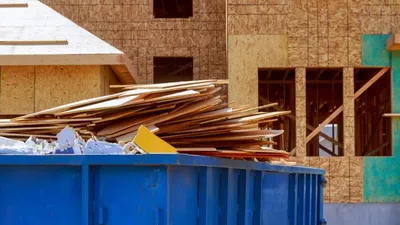
Renovating your home? Drywall, lumber, concrete, and roofing materials have different disposal rules than regular trash. Here's what to know.
Read more →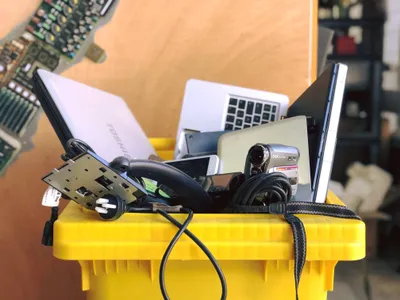
E-waste rules vary wildly by state. Some ban electronics from landfills entirely. Here's how to recycle old TVs, computers, and phones properly.
Read more →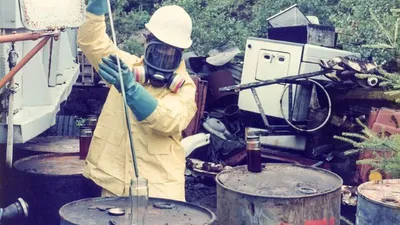
Most counties run free household hazardous waste collection events. Here's what qualifies, how to find your local event, and how to store stuff safely until then.
Read more →