Construction Debris: What You Can (and Can't) Take to the Dump
Renovating your home? Drywall, lumber, concrete, and roofing materials have different disposal rules than regular trash. Here's what to know.
Read more →Small city transfer station on Garfield Avenue that locals use for household junk and small contractor loads. Trash is compacted and loaded into larger trucks to be hauled out to a landfill, so it's often quicker than driving all the way to a distant dump.
Drive up to an entrance booth and expect to cross a scale-loads are typically charged by weight, so there’s usually a stop on the way out as well. Traffic gets funneled into lanes where drivers drop material into large roll-off containers or pits, and the working area has concrete pads and high retaining walls. The site looks industrial with lots of trucks, compactors and piles of sorted material; it can be noisy and dusty, so keep vehicle windows closed if waiting in line. Weekends, especially during spring cleanup, tend to be the busiest times and lines can back up.
Learn how to properly dispose of common items.
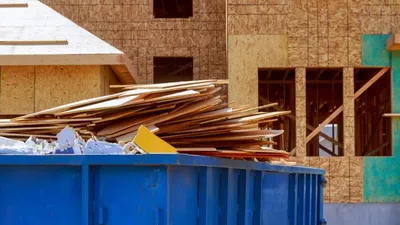
Renovating your home? Drywall, lumber, concrete, and roofing materials have different disposal rules than regular trash. Here's what to know.
Read more →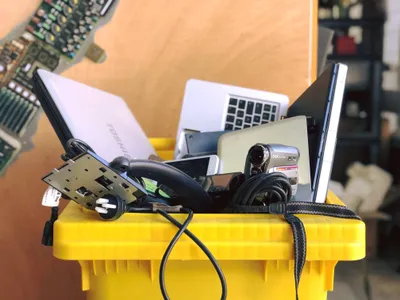
E-waste rules vary wildly by state. Some ban electronics from landfills entirely. Here's how to recycle old TVs, computers, and phones properly.
Read more →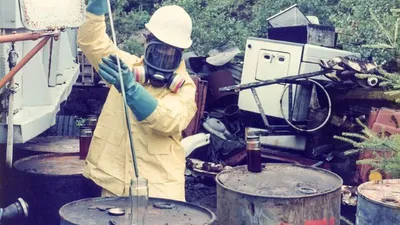
Most counties run free household hazardous waste collection events. Here's what qualifies, how to find your local event, and how to store stuff safely until then.
Read more →