Construction Debris: What You Can (and Can't) Take to the Dump
Renovating your home? Drywall, lumber, concrete, and roofing materials have different disposal rules than regular trash. Here's what to know.
Read more →Tuba City Compactor Station on Edgewater Drive is where locals drop off household trash and small truckloads. Neighbors with pickups, trailers, or bags from a yard cleanup are the usual visitors. It's a working lot with metal bins and a big compactor rather than a landscaped public facility.
Approach the entrance where a small booth and a weigh scale are commonly found at compactor stations; many sites charge by weight so expect to stop for a quick weigh-in or weigh-out. The yard is mostly gravel with open drop-off points and the compactor visible from the entrance, so maneuvering takes a bit of attention-backing a pickup up to a hopper is normal. Lines tend to build on weekends and during spring cleanup season, so quieter times are weekday mornings or late afternoons. Watch for dust, loose debris, and uneven ground around the piles.
Learn how to properly dispose of common items.
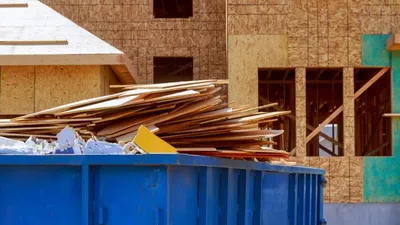
Renovating your home? Drywall, lumber, concrete, and roofing materials have different disposal rules than regular trash. Here's what to know.
Read more →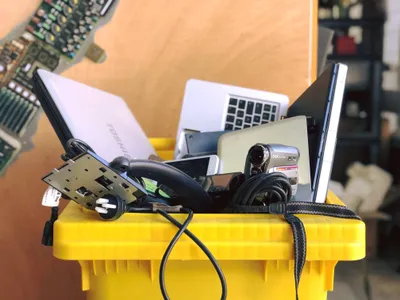
E-waste rules vary wildly by state. Some ban electronics from landfills entirely. Here's how to recycle old TVs, computers, and phones properly.
Read more →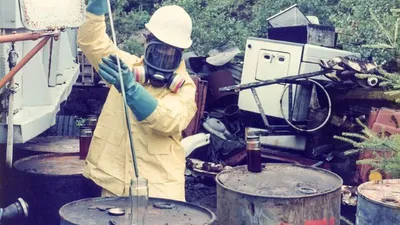
Most counties run free household hazardous waste collection events. Here's what qualifies, how to find your local event, and how to store stuff safely until then.
Read more →